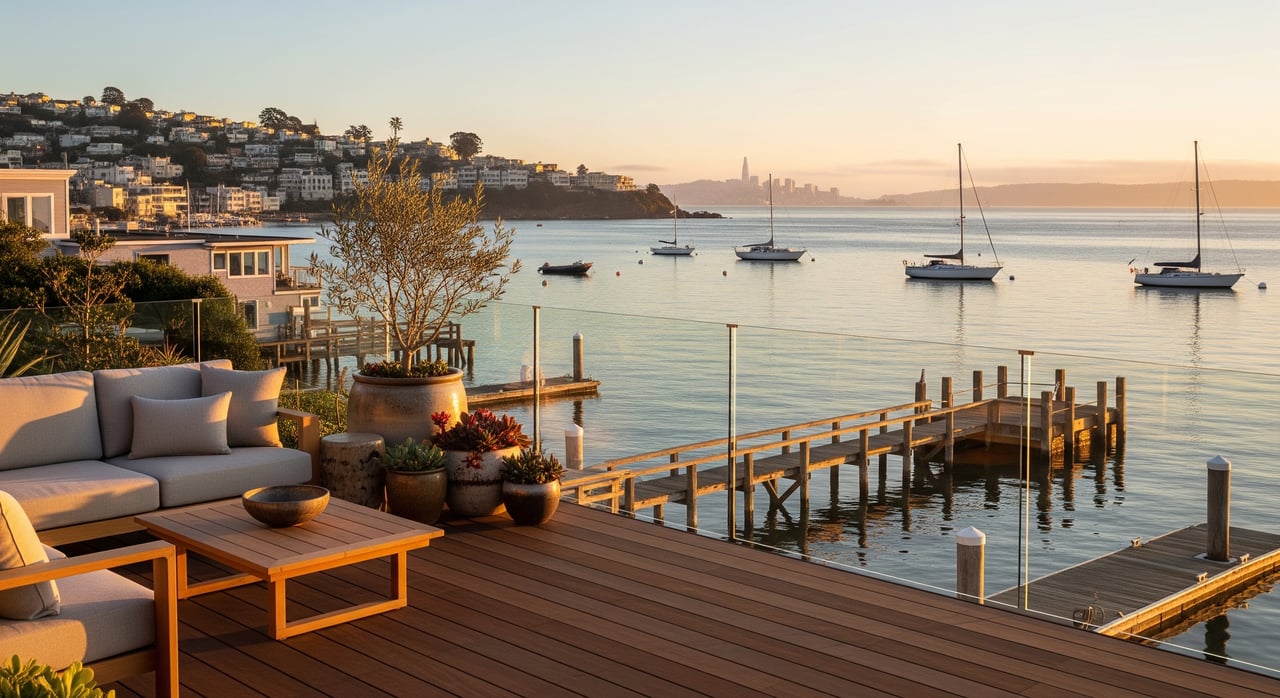
Do you picture mornings on a dock with coffee in hand, or sunsets from a hillside deck with the bay at your feet? If Sausalito’s waterfront has been calling, you are not alone. The town blends marina life, floating homes, and view-filled hillsides in a way few places can match. In this guide, you will see how daily life actually feels here, from commutes and errands to housing types, costs, and what to expect season to season. Let’s dive in.
Waterfront districts at a glance
Sausalito’s waterfront is not one single experience. Understanding the key areas helps you narrow your fit.
Bridgeway and downtown
Bridgeway lines the bayfront with restaurants, galleries, and the ferry landing. It is vibrant during the day and busiest in summer and holidays. You get quick access to dining and services, with more foot traffic and visitor activity.
Richardson Bay houseboats and marinas
Sheltered waters host clusters of floating homes and small marinas. Life here feels intimate and maritime. You will see unique architecture, smaller indoor footprints, and direct water access. Expect extra attention to salt and moisture exposure and the rhythms of marina activity.
Hillside bay-view neighborhoods
Above the shoreline, hillside homes and condos offer panoramic views and more conventional construction. It is typically quieter than the commercial core and often a touch warmer and less windy than the immediate waterfront, while still close to the marina scene.
Commutes and daily rhythms
Ferry basics
Golden Gate Ferry connects Sausalito and San Francisco. The ride to the city is about 25 to 35 minutes depending on the specific route and schedule. Ferries are a pleasant, reliable alternative to driving, though peak departures can be busy and bike capacity varies by vessel.
Driving and buses
If you drive, the Golden Gate Bridge puts San Francisco within roughly 25 minutes off-peak. Plan for longer times during rush hour. Golden Gate Transit and Marin Transit run bus routes over the bridge and around Marin, giving you a schedule-friendly option when traffic is heavy.
Biking and on-foot
Active commuters can bike across the Golden Gate Bridge to San Francisco destinations like Crissy Field. Around town, walking and short bike trips are common, especially along the flats near the waterfront.
Parking and errand timing
Parking at the Sausalito ferry terminal is limited. Some residents use nearby terminals with larger lots, such as Larkspur, to keep commutes predictable. For daily errands, plan for heavier visitor traffic on Bridgeway during peak season. Going early or midweek can save time.
Errands and services
Groceries and shopping
You will find small markets and specialty shops in town. For bigger shopping runs and big-box stores, many residents head to nearby cities like Corte Madera, San Rafael, or Mill Valley. It is smart to combine those trips to make the most of your time.
Health care access
Routine care is available across Marin County, with larger medical centers and specialty services in San Rafael and other nearby hubs. Many residents schedule non-urgent visits outside peak tourist windows to simplify parking and travel.
Schools and enrollment
Local elementary options are available through Sausalito Marin City arrangements. High school assignments are typically within the Tamalpais Union High School District. For the most current boundaries, enrollment steps, and transportation options, review the district websites and confirm details directly. School suitability varies by household needs and commute patterns.
Seasonal rhythms
Summer and holidays bring more visitors, boat activity, and higher demand for parking and restaurant tables. Off-season is quieter and may include reduced hours at some visitor-oriented shops. Plan your routines accordingly.
Recreation and culture
On the water
Boating, sailing, kayaking, paddleboarding, and fishing are everyday draws. Many residents keep small craft in local marinas or launch nearby. Richardson Bay, Angel Island, and the broader San Francisco Bay make weekend day trips easy.
Trails and open space
Marin Headlands, Fort Baker, and nearby trails offer quick escapes for hiking, wildlife viewing, and big coastal views. If you bike, the Golden Gate Bridge and the Golden Gate National Recreation Area connect you to extensive routes on both sides of the bay.
Arts and community
Sausalito’s galleries, seasonal art shows, local festivals, and farmers’ markets add creative energy to daily life. The town’s art-forward culture is a defining part of its identity.
Housing options and realities
Floating homes and houseboats
Floating homes and houseboats are a signature of Sausalito. They vary in structure and legal status. Some are treated as personal property, not real estate. Financing often involves specialty marine or chattel loans, which can differ from traditional mortgages. Verify utilities, slip leases, and how sewer, electrical, and pump-out systems are set up. Resale considerations and ongoing moorage fees are important parts of the total cost.
Marinas and liveaboard slips
Marinas offer wet slips, dry storage, and guest moorage. Some slips are rented, others leased long term. Liveaboard status, if allowed, depends on marina rules. Understand the agreement terms, transferability, and any limits on occupancy.
Hillside homes and condos
On land, you will find conventional single-family homes and condos with bay views. These properties tend to follow standard residential purchase, financing, and inspection processes. View homes command a premium, and pricing sits among the higher tiers in the Bay Area market.
Costs, insurance, maintenance
Flood and earthquake coverage
Coastal properties face flood and tidal risks. Many waterfront parcels fall within FEMA flood zones. Standard homeowners policies typically exclude flood, so separate flood insurance through the National Flood Insurance Program or private carriers is often needed. Earthquake insurance is a separate product to consider in this seismically active region.
Maintenance realities
Salt air increases wear on decking, metal fasteners, paint, and finishes. Floating homes may require periodic float work, pump-outs, and marine-grade electrical attention. Budget above-average maintenance compared to inland homes.
Utilities and inspections
Waterfront homes can have nonstandard utility connections. Confirm whether systems tie into city sewer or rely on pump-outs, how on-dock electrical is configured, and that inspections align with local codes. Ask for maintenance records and recent upgrades.
Permits and resilience
Projects on or near the shoreline may involve multiple jurisdictions, including the City of Sausalito, Marin County, regional bay agencies, and state coastal authorities. Expect added time for permits on docks, floats, or shoreline improvements. Sausalito’s shoreline is part of county and regional sea level rise planning. Review maps and long-term adaptation efforts so you understand potential future changes to insurance, permitting, and shoreline projects.
Smart buyer checklist
- Commute plan: Compare ferry, bus, and driving times for your typical schedule. Note parking limits at the ferry and consider alternate terminals as needed.
- Errand map: Identify your go-to grocery, pharmacy, and big-box stops in nearby cities. Batch errands during lower-traffic times.
- Property type fit: Decide between houseboat, marina liveaboard, or hillside home based on space needs, maintenance appetite, and financing path.
- Financing prep: If considering a floating home or houseboat, speak with lenders experienced in marine and chattel loans before you tour.
- Insurance review: Price out homeowners, flood, and earthquake coverage early to understand total monthly cost.
- Utility verification: Confirm sewer, electrical, and water service details and compliance with local codes.
- Lease and title clarity: For floating homes, review slip leases, transfer rules, and any marina-specific terms.
- Permitting outlook: If you plan to renovate, talk with local agencies about scope, timelines, and approvals.
- Resilience lens: Check flood zones and sea level rise resources for long-term planning.
Which lifestyle fits
- You want dockside daily life and direct water access: Consider a floating home in a sheltered marina zone on Richardson Bay.
- You prefer walkable access to cafes, galleries, and the ferry: Look near Bridgeway and the downtown corridor.
- You value privacy, space, and broad bay views: Focus on hillside single-family homes and condos above the waterfront.
Work with a local advisor
Choosing between a houseboat, a marina liveaboard slip, and a hillside home is as much about daily rhythms as price and square footage. A local advisor can help you weigh commute patterns, seasonal traffic, permit paths, and the right financing and insurance mix for your property type. If you are ready to explore Sausalito’s waterfront districts, the Scott Wickham Team offers patient guidance, hands-on coordination, and a tailored search to match how you want to live.
FAQs
How long is the Sausalito commute to San Francisco?
- Ferry rides are about 25 to 35 minutes depending on the schedule and route. Driving can be around 25 minutes off-peak and longer during rush hour.
What should I know about financing a Sausalito houseboat?
- Many houseboats are treated as personal property, so you may need specialty marine or chattel loans with terms that differ from standard mortgages.
Do I need flood insurance for waterfront property in Sausalito?
- Standard homeowners policies usually exclude flood. Properties in mapped flood zones often require separate flood insurance through NFIP or private carriers.
How does tourist season affect daily life near Bridgeway?
- Expect more foot traffic, busier restaurants, and tighter parking during summer and holidays. Off-season is calmer, with some shops on reduced hours.
What school options serve Sausalito residents?
- Elementary options are provided locally, with most high school assignments in the regional district. Check district websites for boundaries and enrollment steps.
What maintenance is typical for homes on or near the water?
- Plan for increased upkeep from salt exposure, including decking, fasteners, finishes, and, for floating homes, float maintenance and pump-outs.
